Solar › Residential
RESIDENTIAL solar panels and batteries for homes in South Devon
Solar and batteries, designed around your home.
Get a quoteSolar for your home
What it is
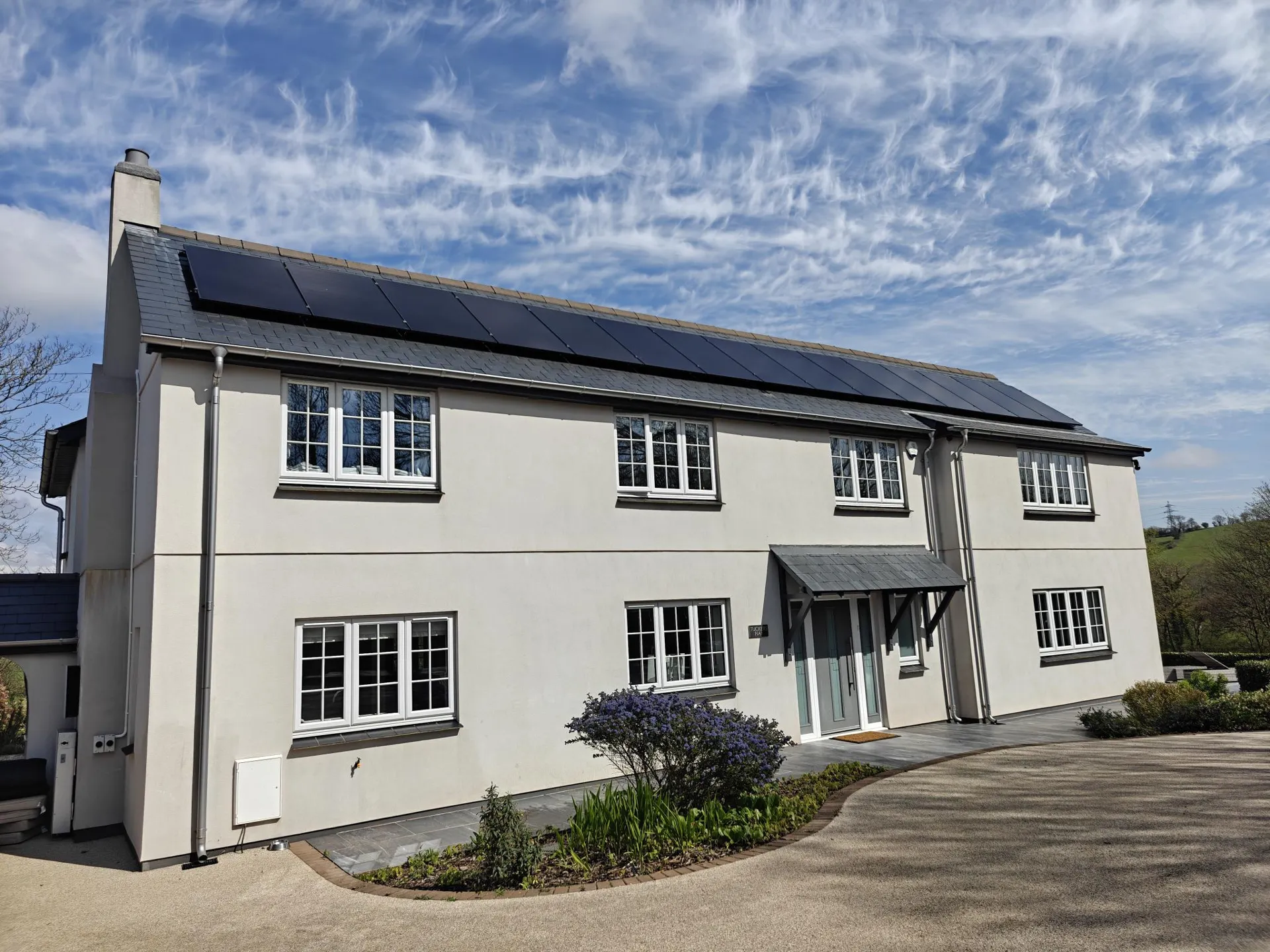
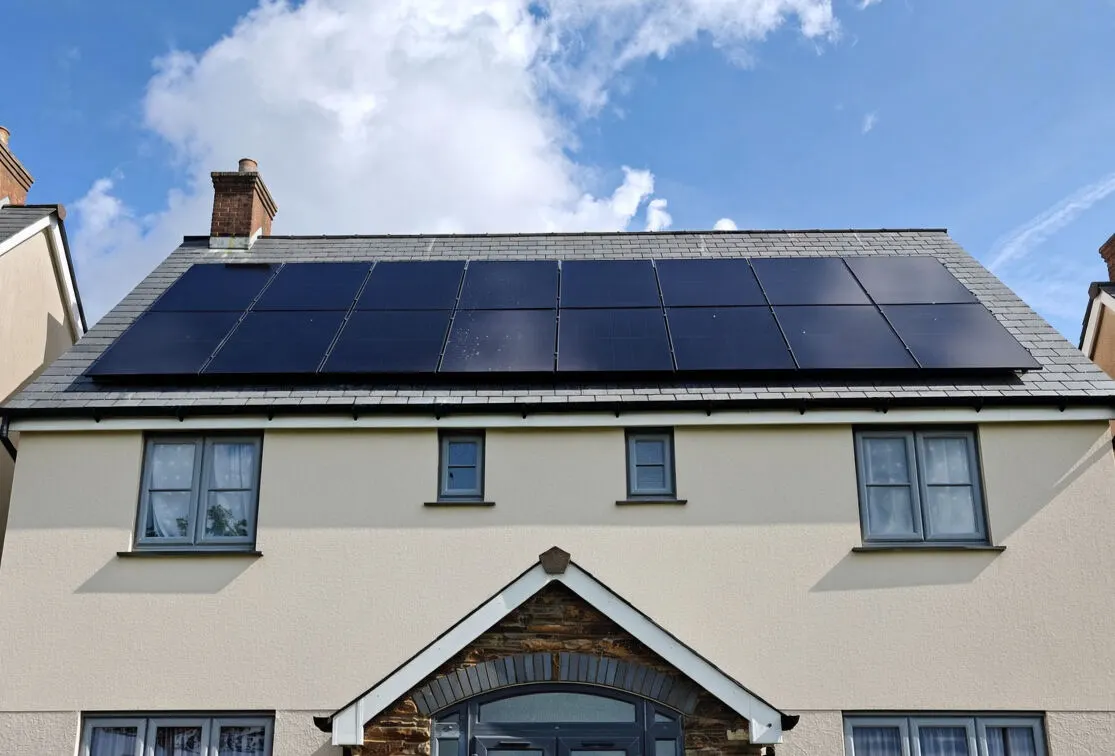
We design and install solar panels and battery storage for homes across South Devon: in-roof, on-roof, flat roof or ground mount, with a battery, solar diverter or smart EV charger where they suit. Every system is surveyed and sized around your roof and how your household uses electricity.
Every unit of electricity your panels make and you use in the home is one you don’t buy from the grid, so the system is designed to help you use as much of your own generation as you can. See where the savings come from below.
We design home solar and battery systems for households across Ivybridge, Plymouth, the South Hams and South Devon.
Who it suits
- Families at home in the day, or out and using power in the evening
- Homes with electric heating or a heat pump
- Homes with an electric shower or immersion heater
- Drivers with an EV, or one on order
- Anyone on, or open to, a time-of-use tariff
Why it’s worth it
The benefits
Designed around your home
In-roof, on-roof, flat roof or ground mount, sized to your roof and your usage.
Use it after dark too
A battery stores daytime surplus so it can run your home in the evening.
Make the most of cheap rates
A battery can charge on a cheaper off-peak rate and cover the pricier peak hours.
The price you agree is the price you pay
You get a clear, itemised estimate, usually within 5 working days of the survey, and the price you agree is the price you pay.
Savings
Where the savings come from
Here’s how solar, and a battery where it helps, can take a bite out of the biggest users of electricity in a typical home. How much each one saves depends on your usage and your tariff.
Heating: heat pumps and electric heating
Heat pumps and electric heaters run on electricity, so every unit of solar they use is one less unit bought from the grid. Solar helps most in spring and autumn, when the heating is still on and the days are bright, and with daytime running such as pre-warming the house before you get home.
Heating demand is highest in midwinter, when solar generation is lowest, so we’re honest about how much of your heating solar can cover. A battery charged on a cheap overnight rate can help with the rest.
Hot water: solar diverters and immersion heaters
When your panels make more than the house is using, that surplus would normally be exported. A solar diverter sends it to your hot water cylinder’s immersion heater instead, so the sun heats your water rather than you paying for it.
This works best with a hot water cylinder and is a simple way to use more of your own generation on sunny days, especially in summer.
Cooking
Electric ovens, hobs, air fryers and kettles draw a lot of power while they’re on. Daytime cooking and baking can run straight off the panels, and a battery can cover the evening meal with electricity you stored earlier in the day.
Electric showers
An electric shower is one of the most power-hungry things in a home, but only for a few minutes at a time. A battery can supply some or all of that burst of power from stored solar, depending on the battery and inverter, instead of pulling it all from the grid.
EV charging
A smart EV charger can be set to charge your car from surplus solar, so on sunny days at home your driving can run on your own sunshine. When there isn’t enough sun, it can charge on a cheap off-peak rate instead. See EV chargers with solar.
Batteries: shifting solar into the evening
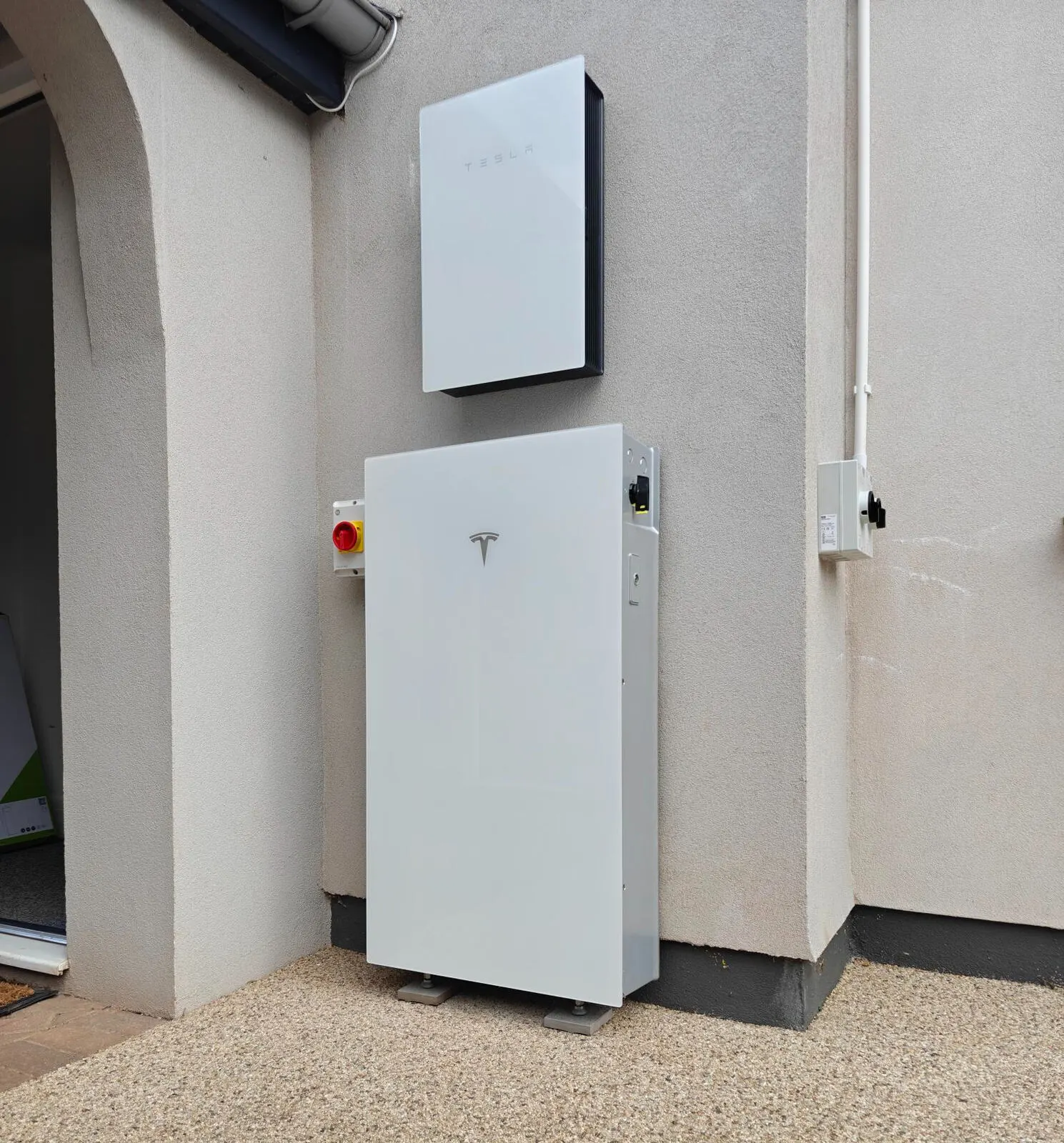
Most homes make the most solar in the middle of the day but use the most electricity in the evening. A battery bridges that gap: it stores what you don’t use straight away and releases it when you get home, cook and settle in. We fit trusted brands and are a Tesla certified installer. See solar + battery.
Cheap-rate and export tariffs
On a time-of-use tariff, electricity is cheaper at certain times, usually overnight. A battery can top up at the cheap rate and run the house through the expensive peak, then refill with solar the next day. With an MCS-certified install you can also apply for Smart Export Guarantee payments for what you send to the grid. The best set-up depends on your tariff, and we’ll explain the options.
Typical prices
What solar typically costs
Prices are for a two-storey house with medium-to-high quality brands. Cheaper brands could lower the price, and premium brands could raise it.
Prices include scaffolding and certification. In-roof is priced at 1.3× the solar and roof-works part, and flat roof is 15% less on that part; batteries, inverters and gateways cost the same on any roof.
All prices are exclusive of VAT.
Prices are a guide and subject to a site survey, or photos you send us, so we can give you an accurate quote.
Quotes are always free. Send us a few photos and we can usually give you a reasonably accurate quote without a visit, so there’s no need to take time off work or wait in for us.
What’s included
What a typical home install includes
Survey and design
Your roof, shading, usage and tariff, checked so the system is sized around how you live.
Panels and inverter
In-roof, on-roof, flat roof or ground mount, with a hybrid inverter if a battery is planned.
Find out more →Battery and extras
Optional battery, solar diverter and smart EV charger, set up to work together.
Find out more →Handover and paperwork
Commissioning, a walkthrough of the app, certificates, and the MCS and DNO paperwork handled.
How it works
Four simple steps
- 1
Enquiry
Tell us about your property and what you’re after, online or on the phone.
- 2
Survey
We look at your roof or land, your usage and your supply, then send a clear estimate, usually within 5 working days.
- 3
Install
Our own team fits everything tidily: dust sheets down, clean as we go.
- 4
Handover & aftercare
We commission the system, show you the app and hand over your certificates and MCS paperwork, then call about a week later to check you’re happy.
Grid connections
Grid connections and paperwork, all handled
We have a strong working relationship with National Grid in the South West. We work with them to confirm how much your site can export and what size of solar, battery and inverter is approved for your property, whether that’s a home, business, industrial unit or farm. Every installation follows MCS, NICEIC and BS 7671 regulations. We handle the full process for you: National Grid applications, MCS registration, NICEIC certification, and your certificates and warranty documents at handover.
The technical bit: smaller systems are usually notified to the network operator after install (G98). Larger systems, which includes most commercial, industrial and farm systems, need approval before install (G99), and the network operator can set an export limit.
Rules & regulations
In plain English
A simple overview to help you plan. We check the details for your property at survey.
Planning permission
Most roof-mounted solar on houses is permitted development, with exceptions such as listed buildings and some conservation areas. Ground mounts often need planning permission. We’ll flag anything to check.
Battery location
We follow current guidance (PAS 63100) on where home batteries can safely be installed.
FAQs
Common questions
Will solar cut my electricity bills?
Yes, it can, but it depends on your home and how you use electricity! How much solar saves comes down to how much electricity you use, when you use it, your tariff and the system we design. On many of our projects, solar and solar with a battery typically pay back in about 5–8 years.
Can solar run my heat pump?
Yes, it can help, especially in spring and autumn! In midwinter, when heating demand is highest, generation is lower, so we’ll be honest about how much solar can cover and whether a battery on a cheap-rate tariff makes sense too.
Is a solar diverter worth having?
Yes, it often is if you have a hot water cylinder! It sends surplus solar to your immersion heater, so you heat water with your own generation instead of exporting it.
Do I need a battery to save money?
Yes, a battery helps most homes use more of their own solar, but it isn’t essential! Panels on their own still cut what you buy in the day. A battery lets you use your solar in the evening too, and we’ll tell you honestly whether it suits your usage.
Can I charge my car from my solar?
Yes, you can! A smart charger can use surplus solar to charge your car when you’re at home in the day, and switch to a cheap off-peak rate when the sun isn’t out.
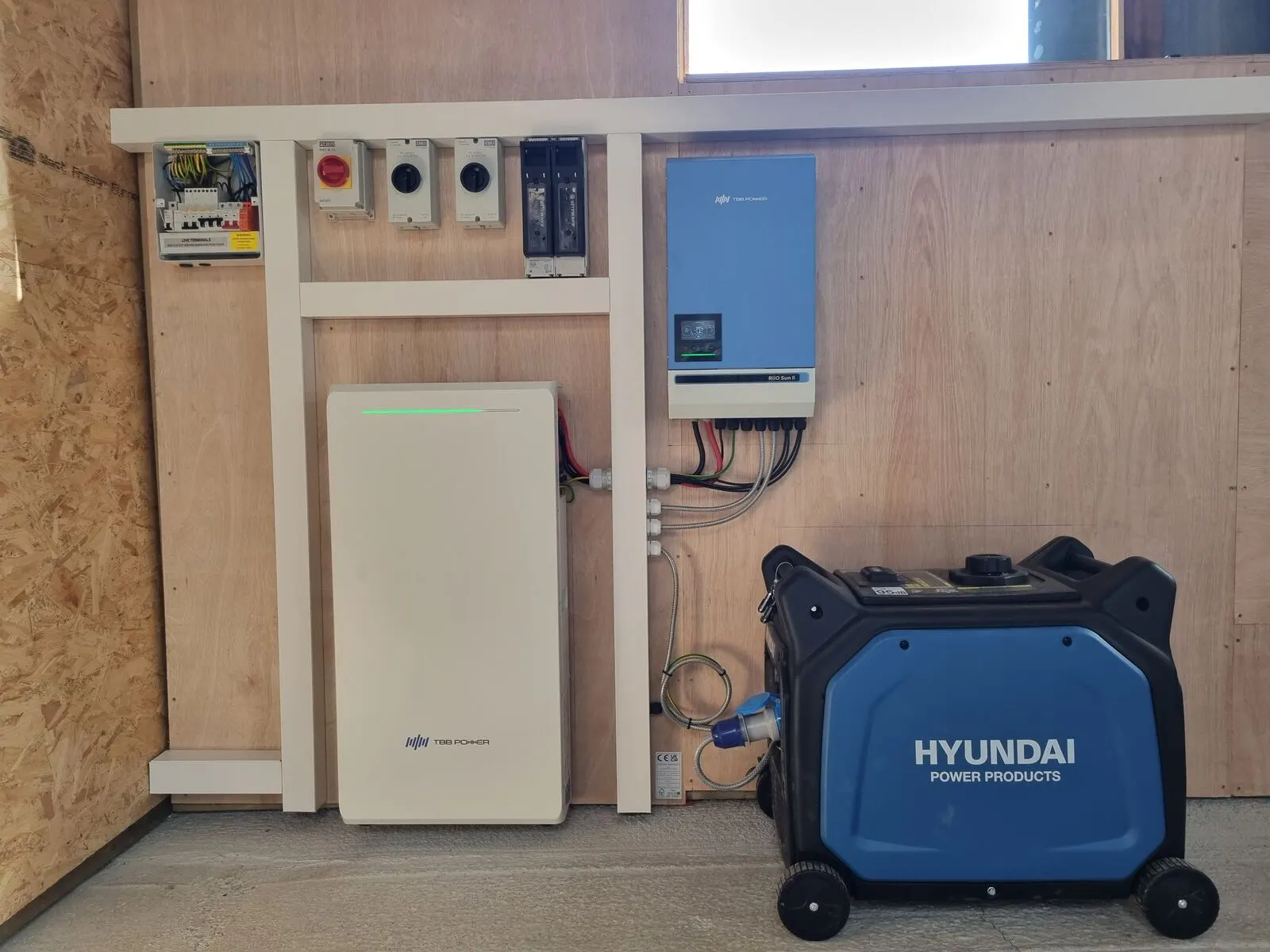
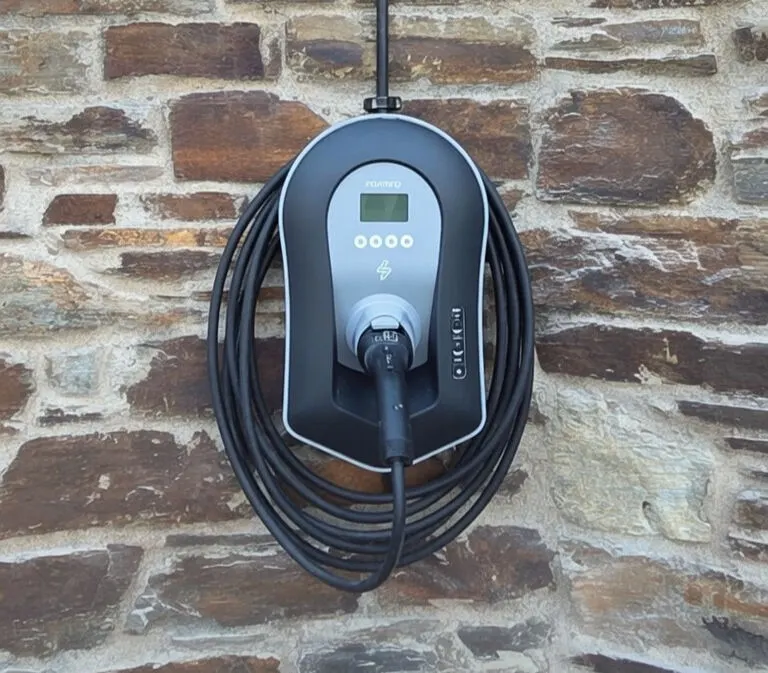
Building new, or planning a bigger project? We can plan solar and battery storage in from the drawings stage, and manage larger commercial, industrial and farm projects from start to finish.
★★★★★ 230 five-star Google reviews
“Ash and crew are professional, meticulous and responsive while providing a warm family feel, their service leaves one certain they've selected the best team for the job!” – Troy Thomas




Let’s look at your home
A few quick questions and we’ll get back to you. No obligation.
Get a quote Call 01752 200496