Solar › Industrial
INDUSTRIAL solar panels for factories, warehouses and cold stores in South Devon
Solar for factories, warehouses and cold stores.
Get a quoteSolar for industrial sites
What it is
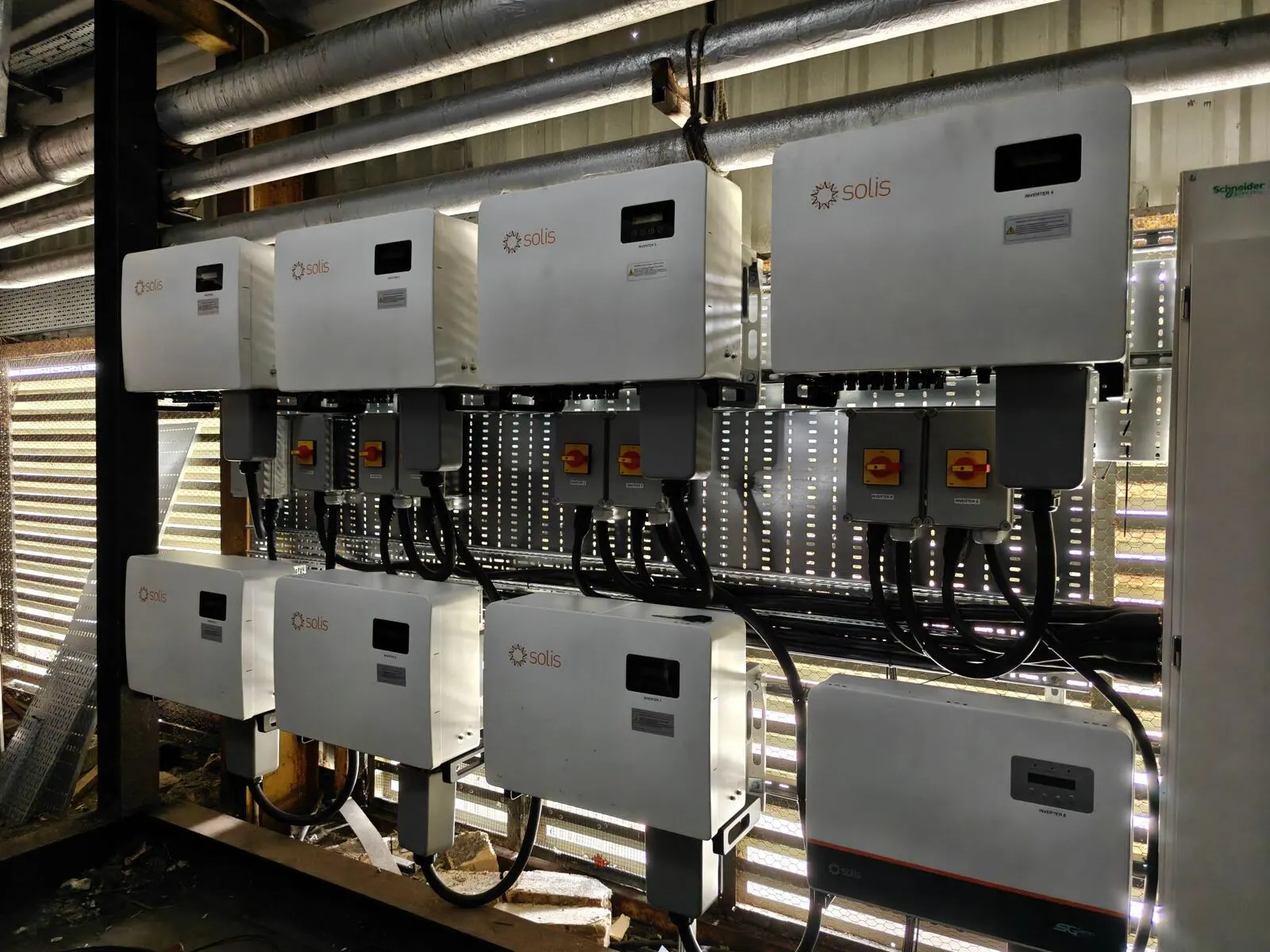
We design and install larger solar systems for factories, warehouses, workshops and cold stores, from survey and structural checks to the network operator application, installation and monitoring.
Industrial sites often combine a large roof with large daytime demand and equipment that runs day and night, so most of what you generate can be used on site rather than exported. See where the savings come from below.
We survey and install solar on factories, warehouses and industrial units across Plymouth, Ivybridge, the South Hams and wider Devon.
Who it suits
- Factories and manufacturing units
- Warehouses and distribution sites
- Cold stores and food processing
- Workshops and engineering firms
- Any site with a large roof and steady daytime demand
Why it’s worth it
The benefits
Large roofs, large systems
Wide warehouse and factory roofs have room for substantial arrays.
Used on site
Heavy daytime demand means more of your generation is used where it’s made.
Base load soaks up solar
Equipment that runs day and night uses generation whenever it’s available.
Insurance-backed warranty
Our renewable installs come with a QANW (Quality Assured National Warranty) insurance-backed warranty.
The price you agree is the price you pay
You get a clear, itemised estimate, usually within 5 working days of the survey, and the price you agree is the price you pay.
Savings
Where the savings come from
The bigger your daytime demand, the more of your own generation you can use. Here’s where it goes on a typical industrial site.
We have seen return on investment, or payback, as low as two years for companies that were spending hundreds of thousands of pounds a year on energy. Every site is different, so we’ll work out the figures for yours.
Why business paybacks are so good
- Big roofs give us room to size the array to make the most of the sun.
- Scaffolding goes up once and the survey is done once. A home might take 10 or 20 panels; an industrial roof can take 100, 200 or even 500, so those fixed costs are spread across far more panels.
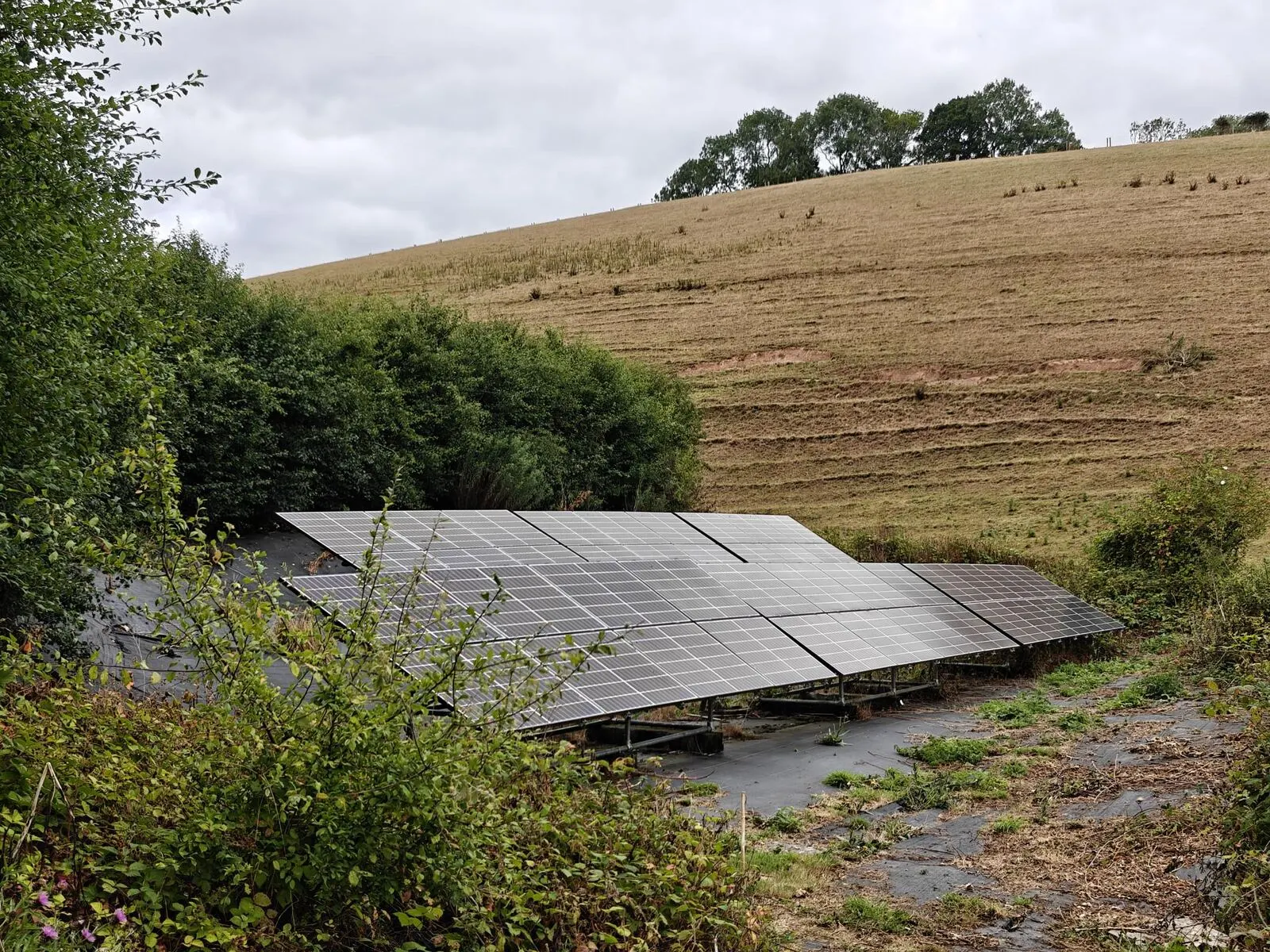
- With a ground mount, there’s no scaffolding and no roof survey at all.
Large roofs
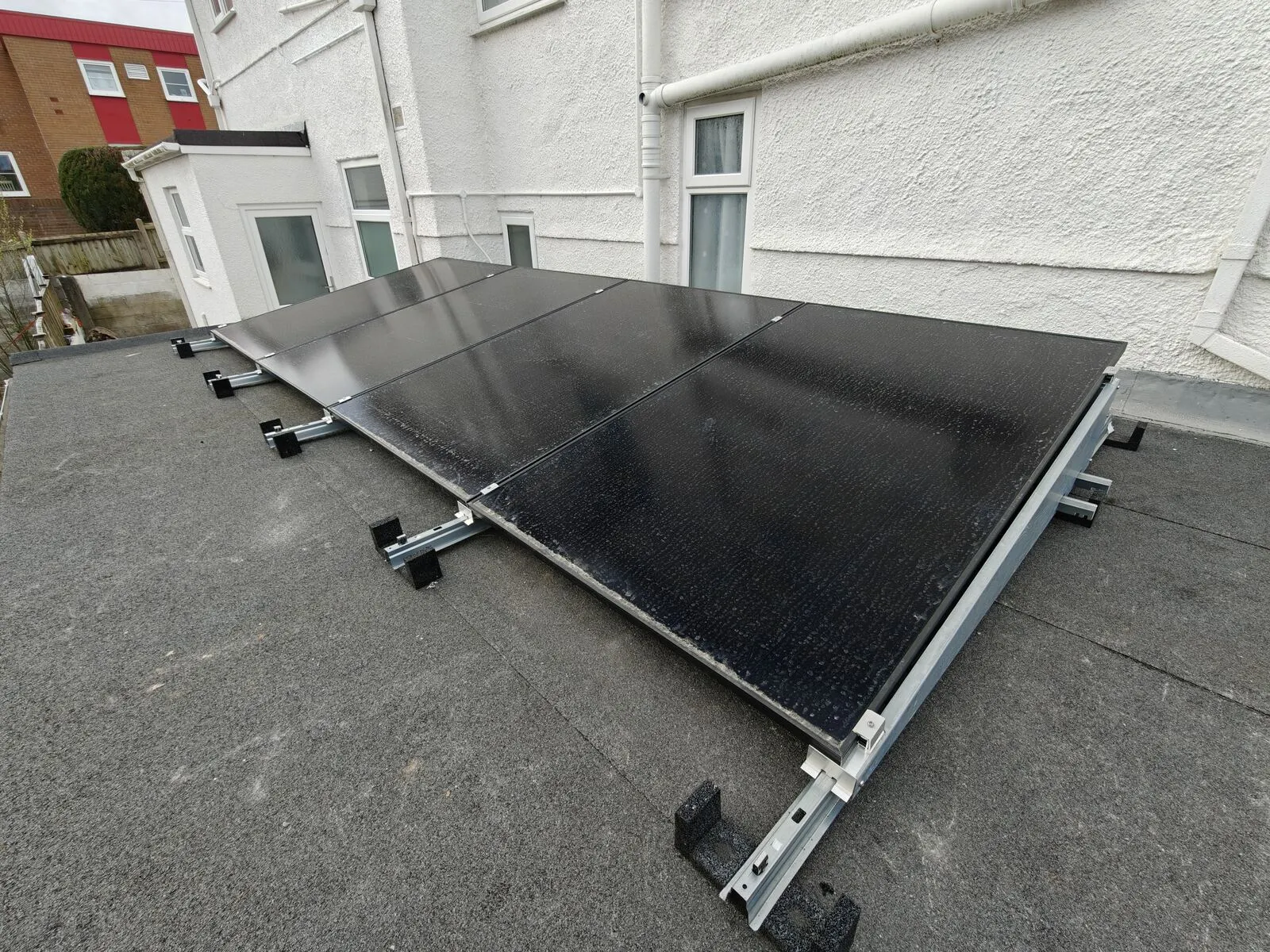
Industrial roofs are often big, open and unshaded, which makes them a natural home for a large array. We check the roof sheets, structure and access at survey, and design the layout around them.
Refrigeration and cold stores
Refrigeration runs around the clock and works hardest on warm, sunny days, exactly when solar generates the most. That makes it one of the best matches for solar on any site.
Machinery, compressors and production
Production lines, compressors, CNC machines, extraction and other heavy equipment draw large amounts of power through the working day. Solar can supply part of that demand directly, reducing how much you import.
Continuous base load
Most industrial sites have equipment that never switches off: refrigeration, ventilation, servers, pumps and security systems. That continuous load means there is always demand on site while the panels are generating, so little of your generation goes to waste.
Using most of your generation on site
When daytime demand is higher than your generation, almost everything the panels make is used on site, and each unit used is one you don’t buy. Where there is surplus, it can be exported or stored in a battery, depending on your system and the network operator’s export limits.
Pricing
Request a site survey
No two commercial sites are alike. Roof size and type, supply capacity, three-phase power and how you use energy all shape the right system. One of our experienced engineers will review your energy bills, assess the site and give you a fully costed proposal with expected payback.
Quotes are always free.
What’s included
What a typical industrial install includes
Survey and load review
Roof, structure, supply and your consumption data, so the system is sized to what you use.
Design and G99 application
System design, and the network operator approval that larger systems need before install.
Planned installation
Work scheduled around your operation, with safe roof access and agreed shutdowns.
Commissioning and monitoring
Testing, monitoring set up so you can track generation, plus full documentation.
How it works
Four simple steps
- 1
Enquiry
Tell us about your property and what you’re after, online or on the phone.
- 2
Survey
We look at your roof or land, your usage and your supply, then send a clear estimate, usually within 5 working days.
- 3
Install
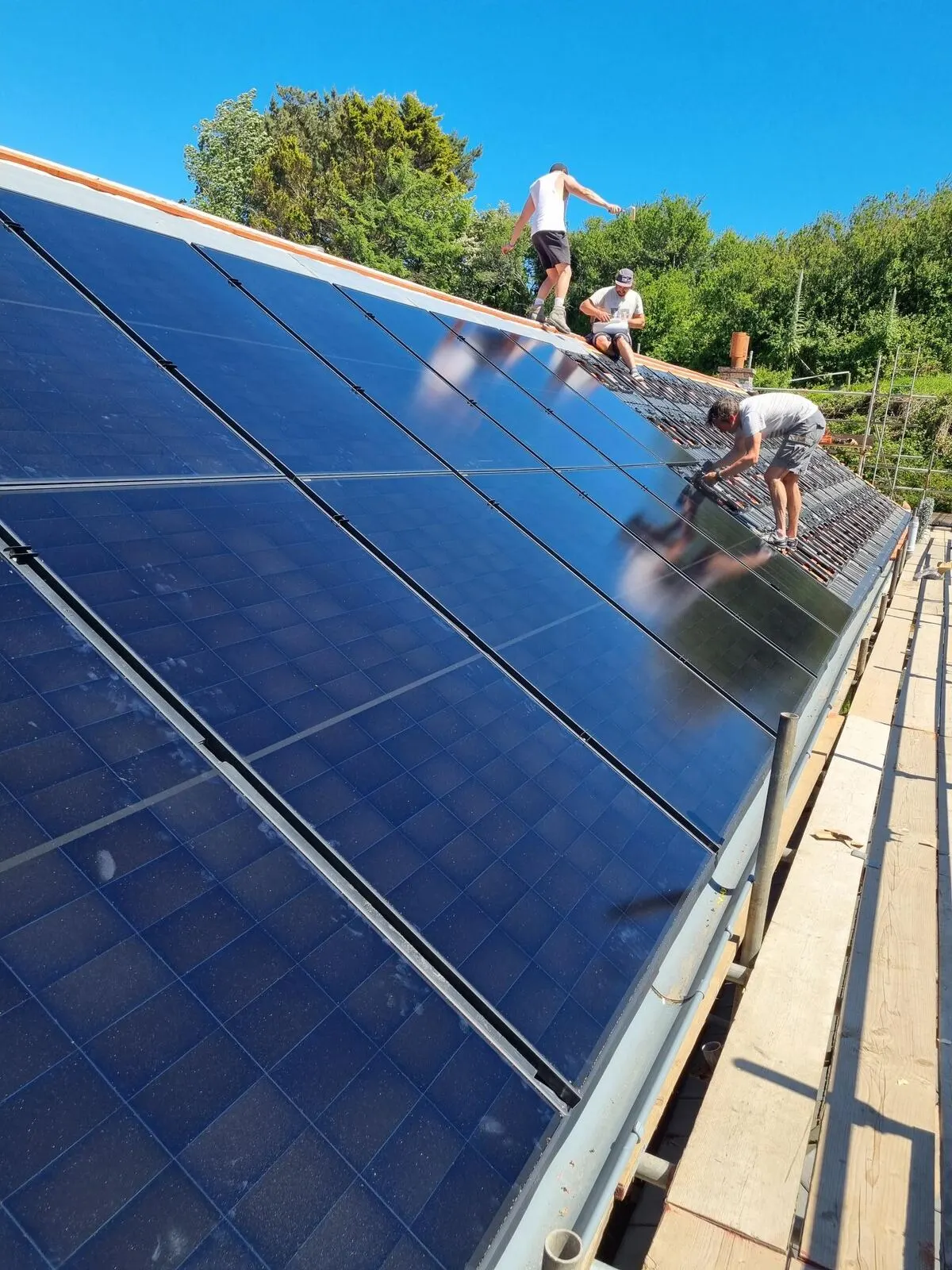
Our own team fits everything tidily: dust sheets down, clean as we go.
- 4
Handover & aftercare
We commission the system, show you the app and hand over your certificates and MCS paperwork, then call about a week later to check you’re happy.
Grid connections
Grid connections and paperwork, all handled
We have a strong working relationship with National Grid in the South West. We work with them to confirm how much your site can export and what size of solar, battery and inverter is approved for your property, whether that’s a home, business, industrial unit or farm. Every installation follows MCS, NICEIC and BS 7671 regulations. We handle the full process for you: National Grid applications, MCS registration, NICEIC certification, and your certificates and warranty documents at handover.
The technical bit: smaller systems are usually notified to the network operator after install (G98). Larger systems, which includes most commercial, industrial and farm systems, need approval before install (G99), and the network operator can set an export limit.
Rules & regulations
In plain English
A simple overview to help you plan. We check the details for your property at survey.
Planning permission
Many roof-mounted systems on commercial and agricultural buildings are permitted development, but there are conditions, and ground mounts, listed buildings and some conservation areas can need an application. We’ll flag anything to check with your council.
Roof structure
Panels, rails and any ballast add load to a roof. We check the structure and covering at survey and, where needed, recommend a structural engineer’s assessment before anything goes up.
FAQs
Common questions
Will solar cut our site’s electricity costs?
Yes, it can. How much depends on your shift patterns, your daytime load, your tariff and the system we design. We’ll talk you through realistic figures after the load review.
Can industrial solar pay back quickly?
Yes, it can. We have seen return on investment, or payback, as low as two years for companies that were spending hundreds of thousands of pounds a year on energy. Every site is different, so we’ll work out the figures for yours.
Can solar power our refrigeration?
Yes, it can help a lot! Refrigeration runs all day and works hardest in sunny weather, so it uses solar whenever it’s generating, with the grid covering the rest.
Can you work around our production?
Yes, we plan around you! Most of the work is on the roof, and we agree timings for any shutdowns needed to connect the system.
Can our roof take the panels?
Yes, many industrial roofs can, and we check before anything goes up! We look at the roof sheets and structure at survey and recommend a structural engineer’s assessment where needed.
Do you handle the network operator?
Yes, we do! Larger systems need G99 approval before install, and we prepare and submit the application for you.
Building new, or planning a bigger project? We can plan solar and battery storage in from the drawings stage, and manage larger commercial, industrial and farm projects from start to finish.
★★★★★ 230 five-star Google reviews
“Ash and crew are professional, meticulous and responsive while providing a warm family feel, their service leaves one certain they've selected the best team for the job!” – Troy Thomas




Let’s look at your site
A few quick questions and we’ll get back to you. No obligation.
Get a quote Call 01752 200496