Solar › Solar panels › In-roof
IN-ROOF solar panels in South Devon
A sleek, flush finish – solar that becomes part of your roof.
Get a quoteIn-roof solar, explained
What it is
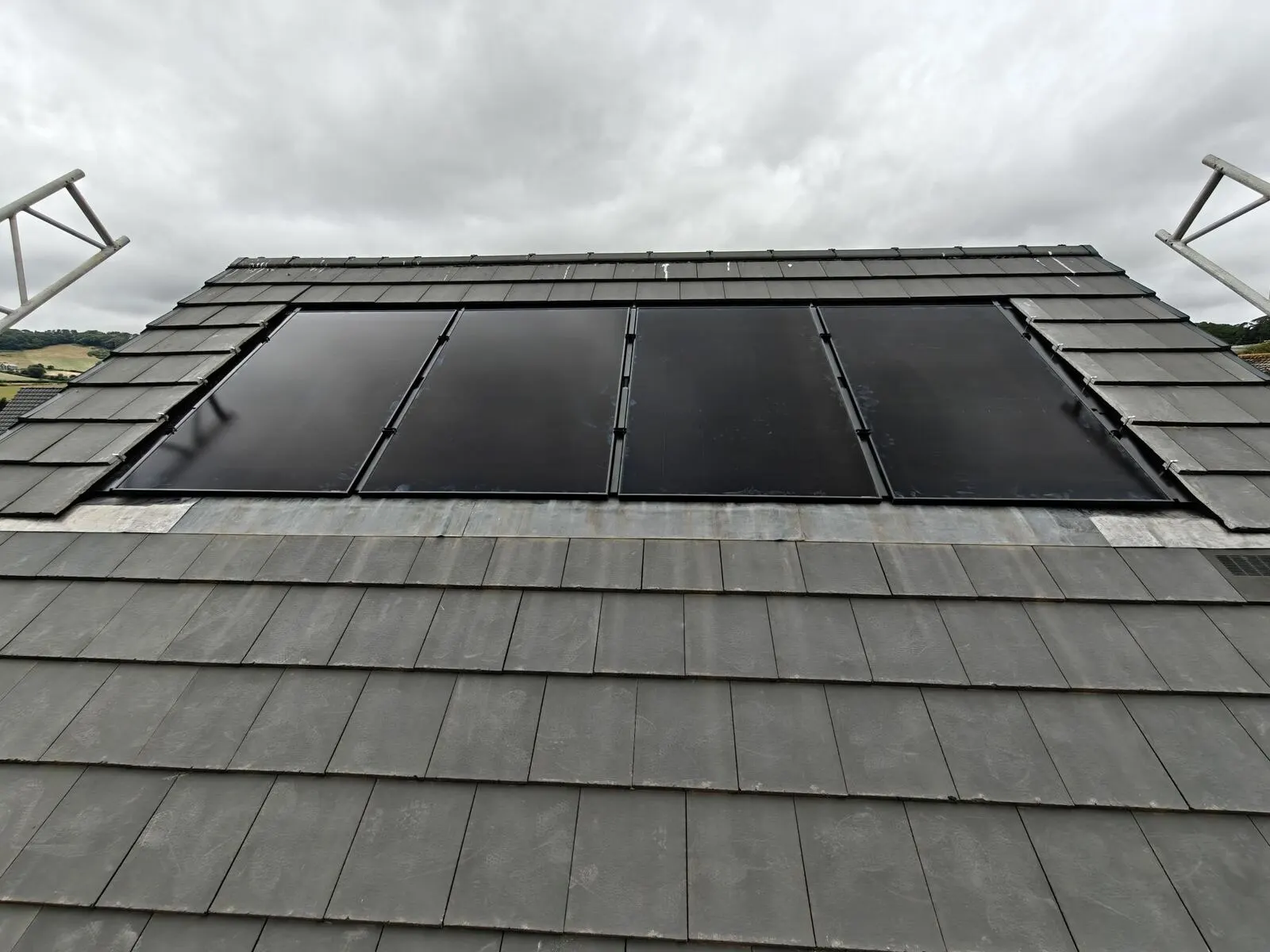
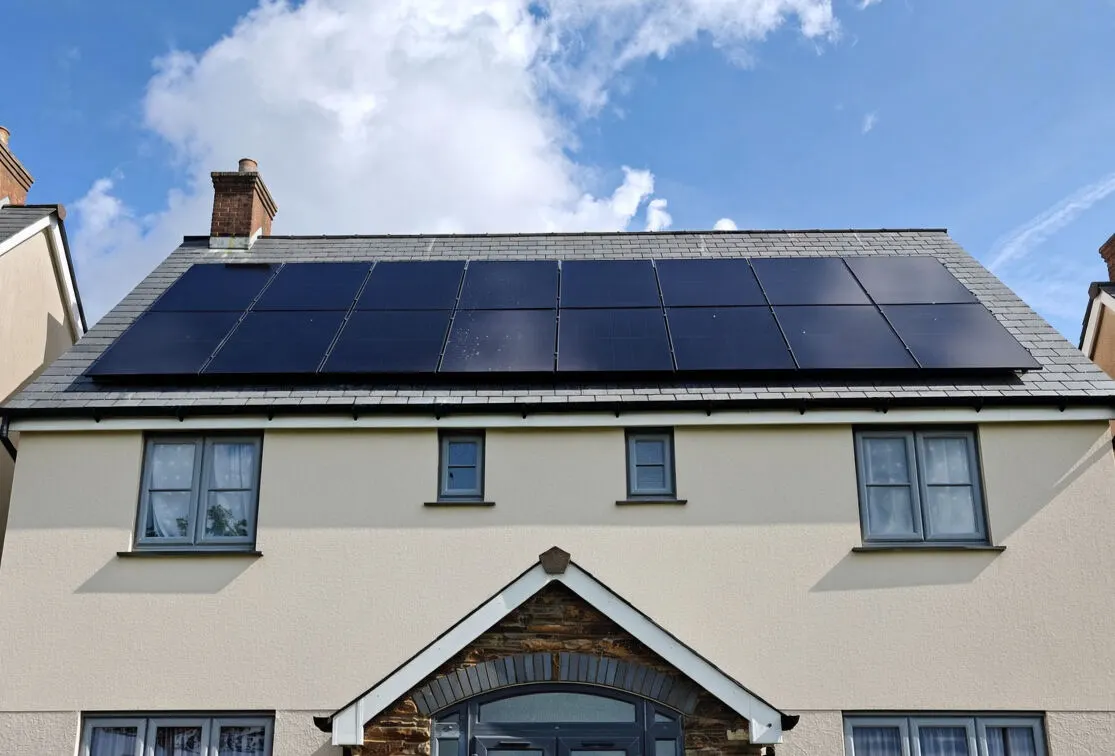
Give your home a sleek, integrated look with in-roof solar that sits flush with your tiles. The panels replace part of the roof covering and are sealed in with a flashing kit.
Professional fitting keeps the roof weather-tight and performing for years.
From our base in Ivybridge we fit in-roof solar on new builds, self-builds and re-roofs across the South Hams, Plymouth and the rest of South Devon.
Who it suits
- New builds and self-builds
- Re-roofs and extensions
- Character homes where looks matter
- Anyone who prefers a low-profile finish
Why it’s worth it
The benefits
Neat, low-profile look
Panels sit in line with the roof rather than on top of it.
Lower bills
Use your own solar electricity and buy less from the grid.
Good fit with roof work
If the roof is being done anyway, in-roof can be planned in from the start.
Ready for a battery
Pair it with a battery to use more of your own generation in the evening.
Things to consider
- It’s most straightforward on new builds or when a roof is being re-covered.
- Some roof types and pitches suit in-roof systems better than others. We check at survey.
- Panel choice is a little narrower than for on-roof.
Typical prices
What in-roof solar typically costs
Prices are for a two-storey house with medium-to-high quality brands. Cheaper brands could lower the price, and premium brands could raise it.
Prices include scaffolding and certification. In-roof is priced at 1.3× the solar and roof-works part, and flat roof is 15% less on that part; batteries, inverters and gateways cost the same on any roof.
All prices are exclusive of VAT.
Prices are a guide and subject to a site survey, or photos you send us, so we can give you an accurate quote.
Quotes are always free. Send us a few photos and we can usually give you a reasonably accurate quote without a visit, so there’s no need to take time off work or wait in for us.
What’s included
What a typical install includes
Survey and design
Roof, pitch, shading and usage checked, with a design that suits your roof covering.
Roof integration
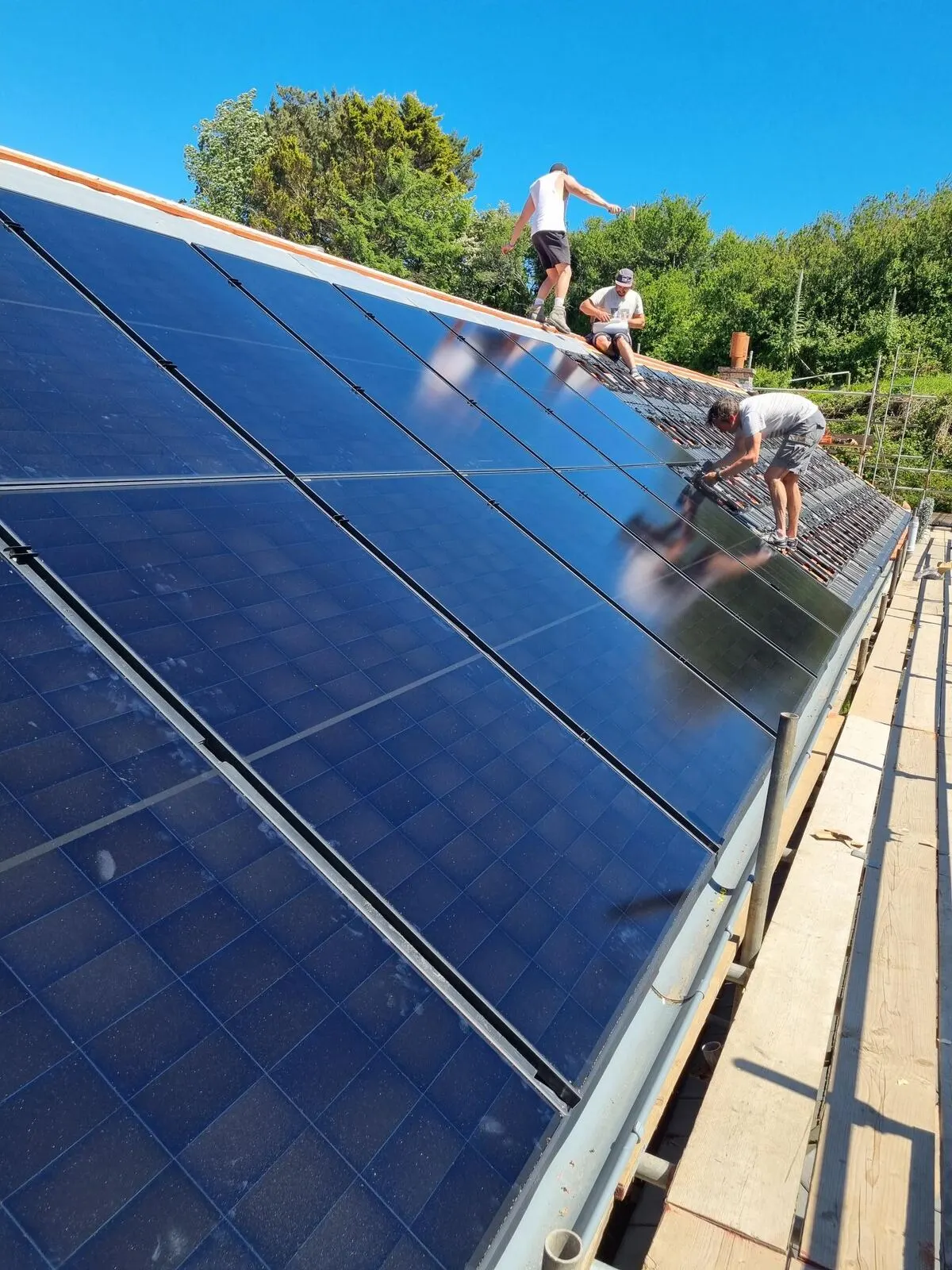
Tiles or slates removed where the array goes and the in-roof mounting and flashing kit fitted.
Panels and inverter
Panels fitted flush, with the inverter or hybrid inverter indoors.
Testing and paperwork
Commissioning, a walkthrough of the app, and MCS and DNO paperwork handled.
How it works
Four simple steps
- 1
Enquiry
Tell us about your property and what you’re after, online or on the phone.
- 2
Survey
We look at your roof or land, your usage and your supply, then send a clear estimate, usually within 5 working days.
- 3
Install
Our own team fits everything tidily: dust sheets down, clean as we go.
- 4
Handover & aftercare
We commission the system, show you the app and hand over your certificates and MCS paperwork, then call about a week later to check you’re happy.
Grid connections
Grid connections and paperwork, all handled
We have a strong working relationship with National Grid in the South West. We work with them to confirm how much your site can export and what size of solar, battery and inverter is approved for your property, whether that’s a home, business, industrial unit or farm. Every installation follows MCS, NICEIC and BS 7671 regulations. We handle the full process for you: National Grid applications, MCS registration, NICEIC certification, and your certificates and warranty documents at handover.
The technical bit: smaller systems are usually notified to the network operator after install (G98). Larger systems, which includes most commercial, industrial and farm systems, need approval before install (G99), and the network operator can set an export limit.
Rules & regulations
In plain English
A simple overview to help you plan. We check the details for your property at survey.
Planning permission
In-roof solar on houses is usually permitted development, like on-roof panels, with the same exceptions such as listed buildings and some conservation areas. We’ll flag anything to check.
Roof work
Because in-roof panels replace part of the roof covering, they’re fitted with the manufacturer’s flashing system to keep the roof weather-tight.
FAQs
Common questions
Is in-roof better than on-roof?
Both are great options; it just depends on your roof. In-roof looks sleeker and suits new roofs and re-roofs, while on-roof is usually quicker on an existing roof, and we’ll tell you honestly which suits your home.
Will it pay for itself?
It can, depending on your home! Solar can help cut your electricity bills, but how quickly it pays for itself depends on your roof, how much electricity you use and when, your tariff and whether you add a battery. On many of our projects, solar and solar with a battery typically pay back in about 5–8 years.
Can you fit it on my existing roof?
Yes, often we can! It means lifting the tiles or slates where the panels go and fitting a flashing kit to keep everything weather-tight, so we check your roof at survey first.
Which brands do you use?
We often fit in-roof systems from trusted names such as Viridian Solar and GSE Intégration, and we’ll recommend the one that best suits your roof and the look you’re after.
★★★★★ 230 five-star Google reviews
“Ash and crew are professional, meticulous and responsive while providing a warm family feel, their service leaves one certain they've selected the best team for the job!” – Troy Thomas




Let’s look at your roof
A few quick questions and we’ll get back to you. No obligation.
Get a quote Call 01752 200496